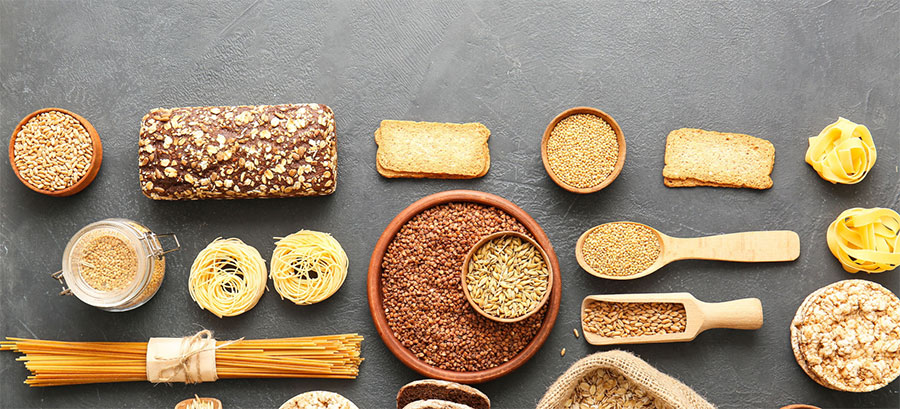
General health recommendations are that we should all base our diets around sources of starchy carbsohydrates.
The NHS recommends that over a third of our dietary intake should come from them. Potatoes, pasta, rice, bread, and other cereals are all types of starchy carbohydrate.
I LOVE a good starchy carb, but sadly, due to my genotype, I should keep my intake to a minimum.
The limiting factor
The gene responsible for this fun-spoiling is called AMY1. AMY1 is a gene that is associated with how much of the enzyme amylase you have in your saliva.
Salivary amylase is an enzyme that begins the process of digesting starch in the mouth. Certain variants of this gene can affect how much of this enzyme you produce, with the ‘risk’ variant leaving individuals with a significantly decreased ability to digest starches compared to those with the ‘normal’ variant.
What does this mean for blood sugar and metabolism?
When you eat something starchy, amylase starts the process of breaking it down into glucose. The more amylase you have in your saliva, the more starch is converted to glucose in the mouth. You might think that this would lead to higher overall blood sugar and potential weight gain, but in fact, studies show that this initial oral reaction between the starch and the salivary amylase results in a short-lived rapid insulin response – resulting in insulin being ‘primed’ to rapidly mop up any excess glucose from the bloodstream, thereby avoiding an unhealthy glucose ‘spike’.
If, however, you are the unlucky recipient of the risk variant of the AMY1 gene (thanks Dad), then you may not have enough salivary amylase to efficiently initiate the breaking down of starches in the mouth into smaller molecules of maltose and glucose. And therefore, this initial insulin response is blunted, leading to a much higher glucose spike after eating starchy carbs.
Why is that bad?
Short term, blood sugar spikes can leave you feeling hungry more quickly, fatigued, and just downright sad. Longer term, frequent blood sugar spikes can lead to inflammation, weight gain (although not always!) and insulin resistance, which is a precursor to type 2 diabetes.
If you want to check your variant of AMY1 and understand more about personalised nutrition, contact me for a consultation.